Written by Peter Watts, FCSN Voices Youth Reporter
Graphics by: Angela Zhao, FCSN Voices Graphic Artist

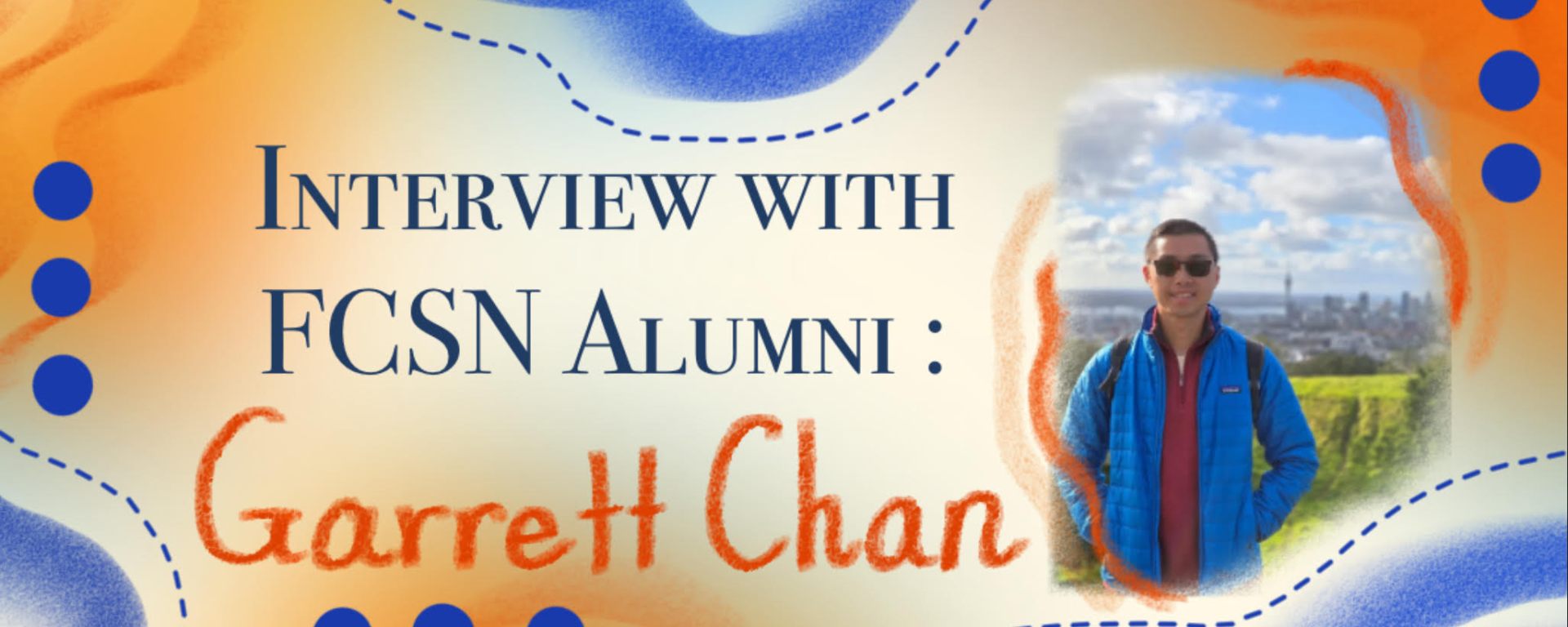
When Dr. Garrett Chan first began volunteering at Friends of Special Needs (FCSN) as a junior high school student, his goal was simple: to spend more time with his younger sister, who is on the autism spectrum. What began as a way to support her, however, quickly grew into a formative experience—one that shaped his patience, empathy, and ultimately, his decision to pursue medicine.
Today, Garrett is an internal medicine primary care doctor at Sutter Health Palo Alto Medical Foundation, having recently completed his residency—the intensive period of hands-on training that doctors undergo after medical school before becoming fully licensed. He works in primary care, where every day brings a new challenge and a new opportunity to connect with patients. But long before his medical training, it was at FCSN where he learned some of the most valuable lessons he carries into his work.
During his early days at FCSN, Garrett would volunteer at after-school programs to care for his sister, and he remembered one moment in particular—the cooking activities. His sister was learning to make a pizza, an activity that, for most, might have seemed simple. But for her, each step—placing the pepperoni, throwing the cheese on evenly—took focus and repetition.
“As the sessions progressed, I really saw my sister improve,” Garrett recalled. “For the very first session, it took her a while to know where to place the pepperoni and cheese, but as the sessions progressed over the next few months, I really observed great improvement, although small.” Garrett fondly recalled the day when his sister assembled the pizza almost entirely on her own: “It really made me proud to have been a part of her journey,” he said.

That memory, Garrett said, taught him to look at progress as something that grows through steady, everyday steps. “I think a lot of volunteers [at FCSN] can attest to that,” he added. “Even if you may not get instant feedback, or if the individuals don’t really tell you ‘thank you,’ they really do care that you helped them over the long run.”
Garrett also recalled the excitement of the FCSN galas at the Santa Clara Convention Center, where volunteers like him helped participants prepare for stage performances. Additionally, he volunteered to help with the drama camp, special olympics, family day, and basketball camp. Over time, Garrett took on more responsibility, eventually serving as a volunteer supervisor at FCSN’s Saturday gatherings.
“Seeing the individuals at FCSN overcome daily adversity are some of the most inspirational moments for me. That’s why FCSN is so great—fostering that environment for those kids so they can really develop good skills and integrate better into society.”
When asked what first inspired him to pursue Medicine, Garrett responded with, “My biggest motivation was my sister. I was her caregiver from a pretty young age. Although my parents were involved, they really pushed me to be more involved in her activities, so that’s why I was with FCSN for a long time.”
Those early caregiving experiences—and the joy of helping others—stayed with him. “Being in that caregiver role, and enjoying helping other people out during times of stress, in conjunction with my interests in biology motivated me to pursue medicine,” he explained.
Through FCSN, Garrett strengthened his bond with his sister and also discovered how deeply fulfilling it felt to be part of someone else’s progress. “FCSN gave me an opportunity to help my sister and other kids with many activities,” he said, “and I found that aspect of being able to change someone’s life for the better to be something very rewarding. I kind of felt like medicine was one of the few professions that really combined my interest in science and helping others together.”

As a doctor, Garrett’s days are still filled with the same type of variety and problem-solving that once energized him as a volunteer. When asked about the best part of his job, Garrett responded with “Every day is different.” He then went on to explain, “In primary care, every patient comes in with something totally different, and even if they come in with the same condition, they may have a different complaint or a different question. It really keeps you on your toes and it’s fun to play detective.”

But what he values most are the relationships that grow over time—the ones that mirror the long-term care and connections he first fostered as a volunteer through FCSN. “Medicine is one of the few professions where we can see the same patient for 20 or even 30 years, or even see their whole family, which I think is really special,” Garrett reflected. “Sure, they come in for a medical complaint, but then sometimes you have pockets of time where you talk about how their family is doing, or how they’re doing with their work, or how their recent vacation went. That makes the job really meaningful.”
Garrett admitted that residency was one of the toughest periods in his life—long hours, steep learning curves, and limited sleep. But the mindset he gained from FCSN helped him push through. “Residency is hard,” he said. “You work six days a week, 70–80 hours a week for weeks at a time, and you’re constantly learning. You learn on the job, since there’s only so much you can learn from the books. But you realize quickly that a lot of the practical knowledge comes from when you’re thrown in the fire, like when you go to the hospital for the first time, or the clinic, and you actually see a patient and figure out what’s going on.”
Through those challenges, the patience he’d learned at FCSN became second nature. “The individuals at FCSN have very special abilities,” Garrett reflected. “Certain things that neurotypicals learn take longer for a neurodivergent individual to pick up. Through FCSN, I learned a lot of patience and empathy, which are really important skills to have in taking care of someone’s health.”
That same empathy shapes how he listens to patients today. Too often, he said, people feel unheard in the exam room. “A lot of the time in medicine, patients complain, ‘the visits are too short, the doctor didn’t hear all my complaints, the doctor was rushing me,’” he said. “So I treat patients as if I were helping my sister or others at FCSN—meeting people where they are at. There are instances where you’re frustrated, but I was primed [because of FCSN] to really take a step back, assess the situation, and evaluate what’s creating a barrier for them to take better charge of their health.”
He compared the interactions with patients to those early cooking sessions at FCSN. “Taking it visit by visit, day by day, and focusing on things that are going well has lots of parallels between patients in medicine and people in FCSN,” Garrett explained. It’s about not always focusing on the negative things. That’s why FCSN is so great—they always focus on someone’s ability, not their disability.”
From the kitchen tables of FCSN to the exam rooms of Sutter Health, Dr. Garrett Chan has come a long way. What began as a brother’s effort to help his sister has grown into a fully fledged career built on compassion and understanding. For Garrett, the lessons of FCSN—patience, empathy, and belief in progress—aren’t just memories. They’re the foundation of how he practices medicine every single day.
 fcsnvoices.org