
Written by: Crystal Chen and Julee Jiang, FCSN Voices Youth Reporters
Graphics by: Kristina Guo, FCSN Voices Graphic Artist
During the summer of 2022, Science for the Bay hosted 30-45 minute science workshops at FCSN. Starting from October 8, 2022, Science for the Bay has extended workshops at FCSN for a 10-week long fall session to meet the popular demand from FCSN coordinators and volunteers. In these workshops, students learned about science through hands-on experiments such as “The Floating Water Experiment,” “Invisible Ink with Lemon Juice,” and the latest “Dancing Candy Cane Experiment.”
The workshop’s fall sessions were held at FCSN’s Chenming and Margaret Hu Center from 4 PM to 5 PM and were taught by volunteer instructors Aditi Deshpande and Sowmya Venkatesh, two sophomores from Amador Valley High School. One session on December 3 focused on the “Dancing Candy Cane Experiment,” in which students mixed fizzing liquid and had candy cane pieces pop up and float.
To keep classes engaging, Deshpande and Venkatesh favor a more hands-on approach over conventional techniques like lecturing. Under the instructors’ attentive guidance, students got to smash candy canes and sprinkle them in a 50% rice vinegar and 50% water solution. Then, they added one teaspoon of baking powder to the mixture, which caused the solution to fizz and the candy cane bits to “dance.”
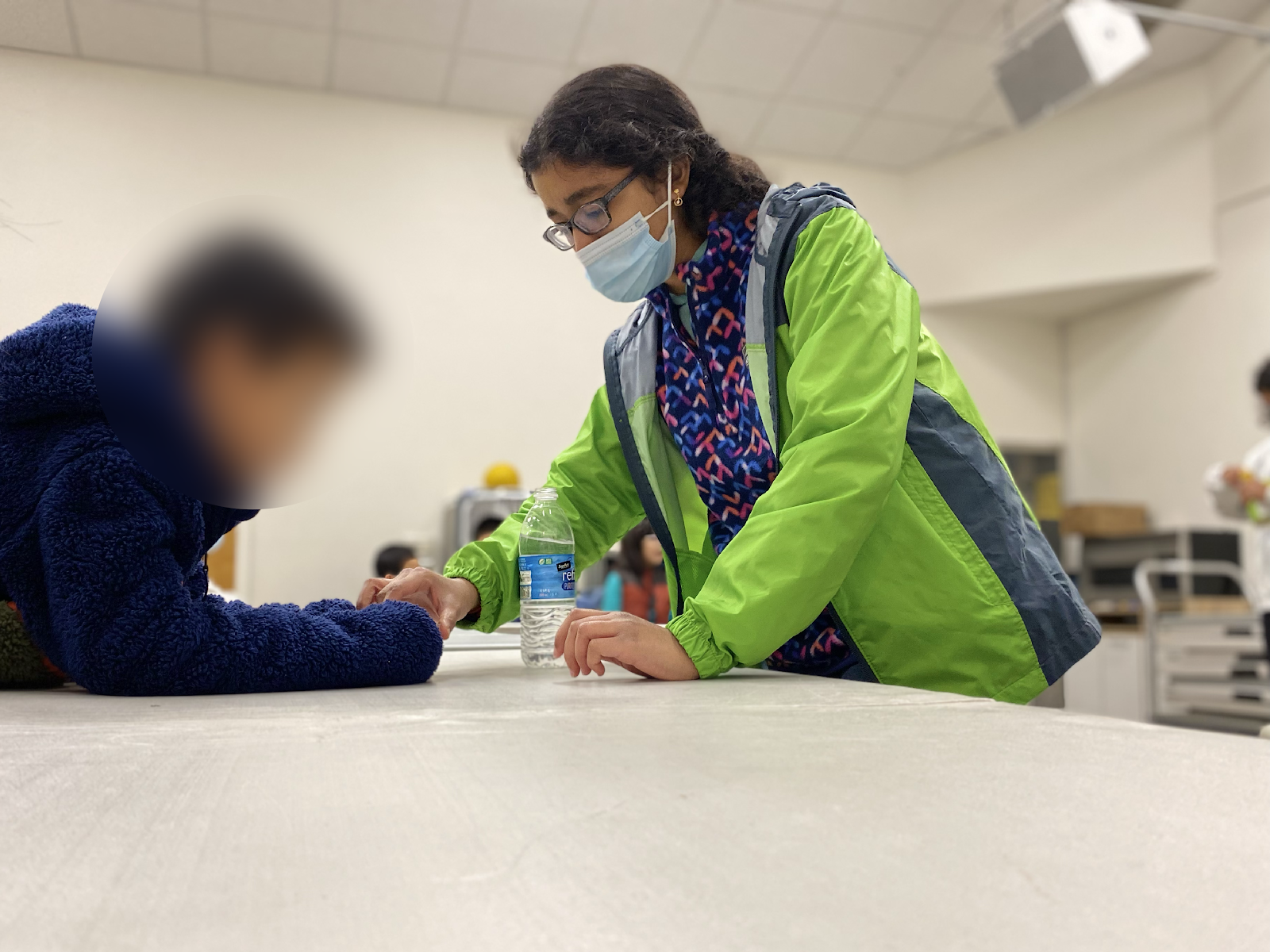
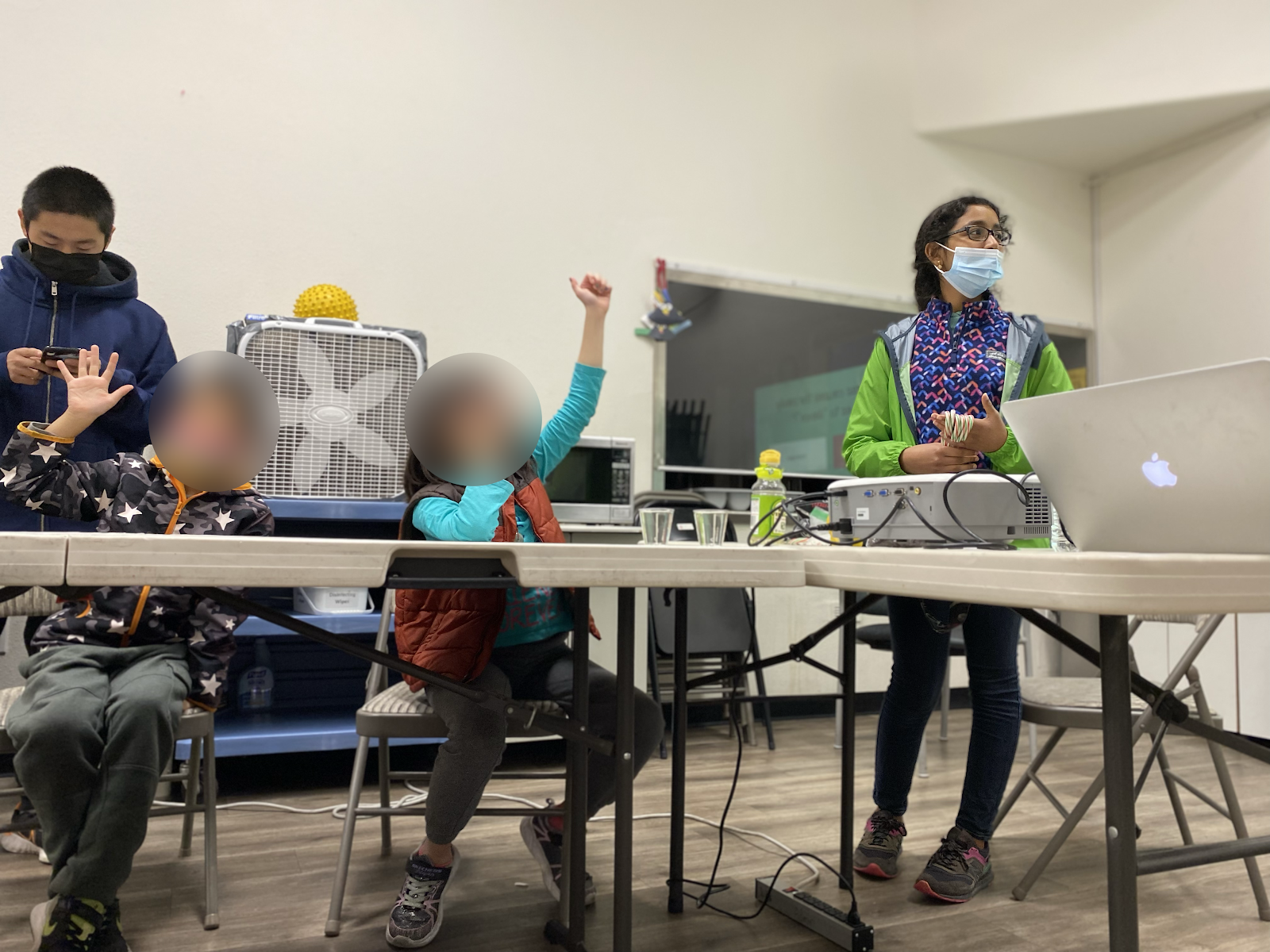
In the middle of class, the instructors also led a game of Simon Says to help teach students valuable skills of listening to instructions and sharing materials with others. “One challenge we faced while working with the students was ensuring they shared all of the science materials with their peers,” Deshpande said. “We overcame this challenge by playing a game of ‘Simon Says’ with them, and they would then immediately listen to the instructions.”
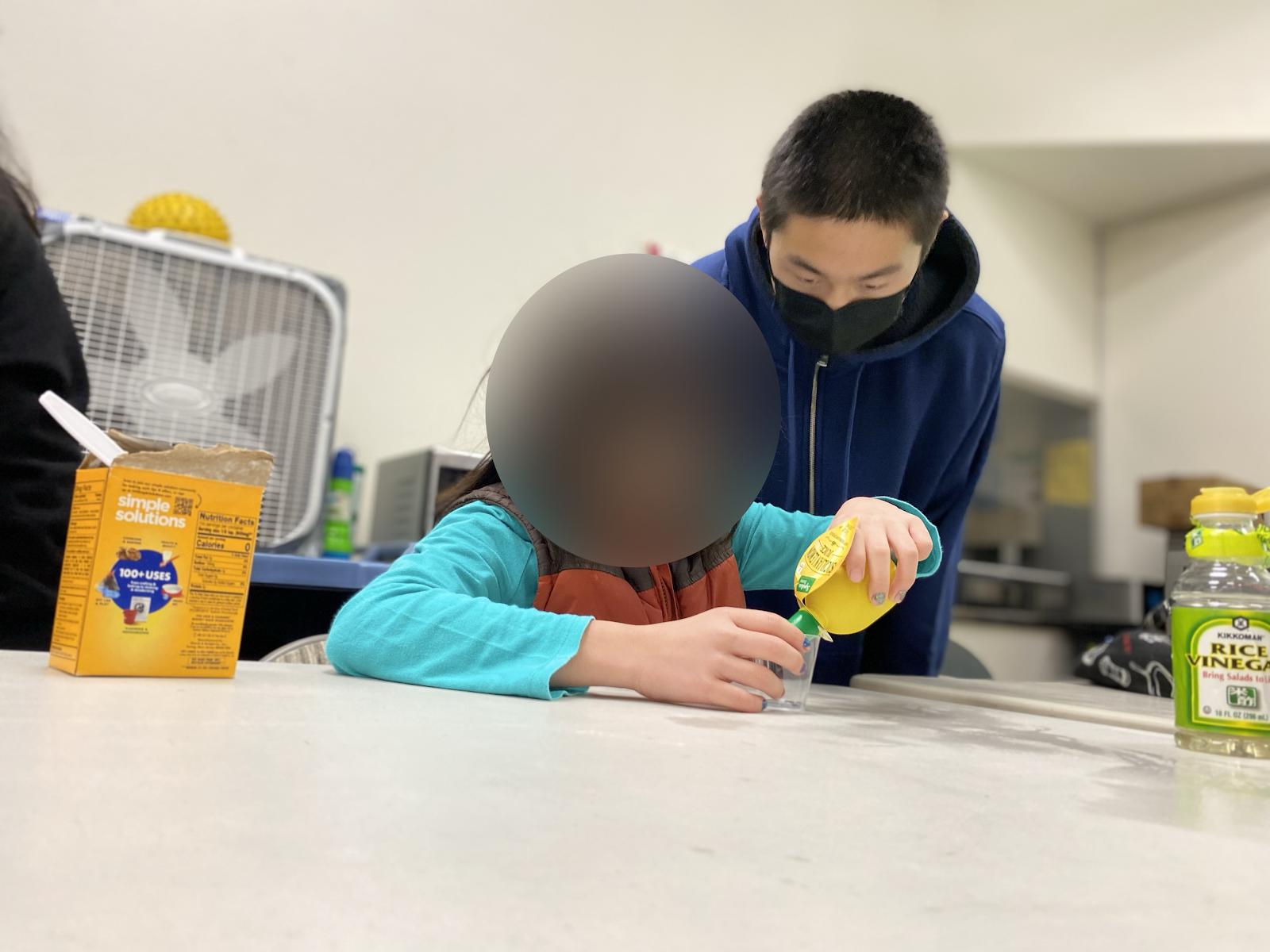
After the brief break, the students conducted another trial using lemon juice instead of vinegar. Following the second experiment, the two instructors had the students participate in an interactive quiz to explore the science behind the experiment. The students learned that the fizz and “dancing candy canes” were caused by an acid-base reaction between the solution and baking soda.
Deshpande and Venkatesh were able to organize the experiment and presentations by closely collaborating with FCSN coordinators and using the background information the coordinators provided to them. “Even though we get the content, it takes a while to rehearse and figure out how you want to explain it to them. Again, it’s hard to explain things like pH, which is about the concentration of hydrogen ions, to kids,” Venkatesh said.
However, not everything turned out how they originally expected. During the experiment, the solution frequently spilled out of the cup, requiring many paper towels for emergency clean-ups. In addition, the candy canes were not “dancing” as noticeably as intended. “That’s because we originally tried [the experiment] with raisins, which worked out,” Venkatesh explained. “But then to make it more fun and Christmassy, we switched to candy canes and that didn’t work out so well.”
Nevertheless, the students, volunteers, and instructors were able to overcome these obstacles and move forward with optimism. “I felt like the kids were very engaged,” Deshpande remarked. “To me, it was a lot of fun because we [the instructors] got to know them and their personalities a lot better, especially through the games.”
Deshpande added, “Even though I expected that we would just be the ones who are teaching and lecturing them, I learned that there’s a lot to learn from the kids as well. I mean, the way they always have such a positive outlook and just are always super bubbly is a really inspiring thing.”
In comparison to her experiences teaching neurotypical middle schoolers Indian Classical Music, Despande describes, “I find that special needs students tend to express their enthusiasm more often, and generally have more energy than neurotypical students.” She described her greatest takeaway from this teaching experience as being “the feeling of fulfillment when the kids enjoy the experiment and are eager to participate in answering questions.”
In the future, the two aim to improve experiments by testing them at the location right before the workshop kicks off and enhancing their presentations with more visuals.
 fcsnvoices.org