Written by: Helen Gu, FCSN Voices Senior Youth Reporter
Graphics by: Kaitlyn Huynh, FCSN Voices Senior Graphic Artist
For many families with children with special needs, the question of care, especially as parents age, is paramount. As many special needs adults transition into independence, Supported Living Services, or SLS, assists them with developing the skills and obtaining resources they need to live on their own in the community. The program helps adults over 18 years old with independent living skills such as hygiene, communication and socialization, safety, nutrition, household maintenance, and more. The program also helps clients find housing and sign up for resources like section 8 housing voucher and IHSS (In Home Support Service). Beyond that, the program helps clients build up living skills so that they can live independently within the community with support.
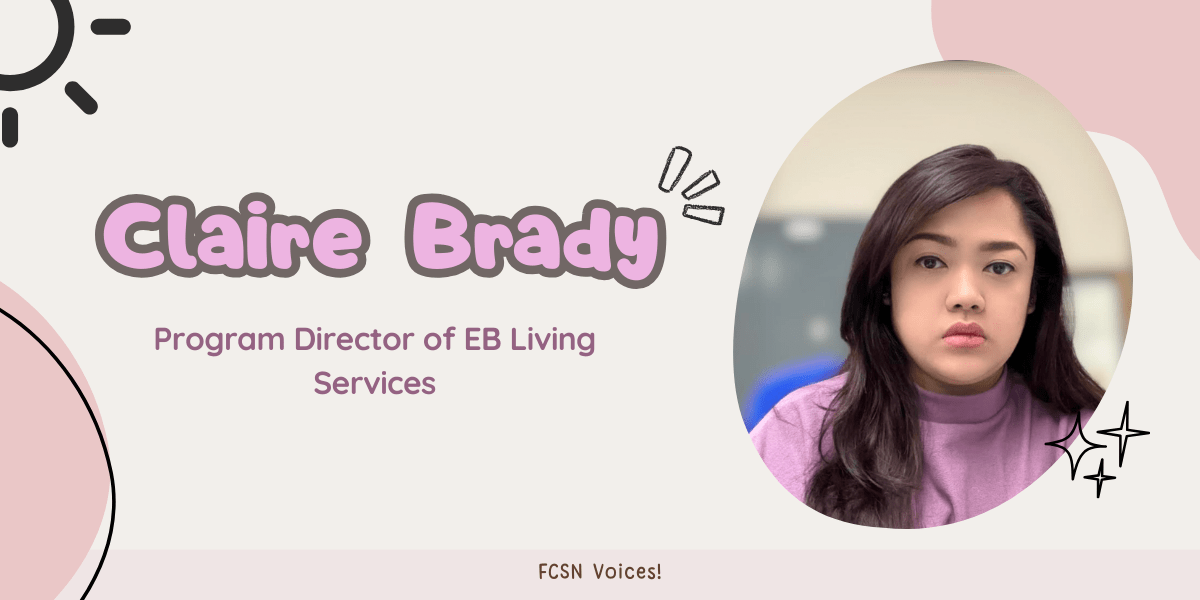
Claire, the FCSN program director for SLS, has seen the program develop from the ground up. Starting from only seven clients, the program now assists 27 families, with many more clients on the waitlist. “SLS has no time limit,” Claire says. “[We house them] for as long as the client can continue living somewhat independently.” This makes SLS a great and dependable resource for many families out there who want to make sure their children are taken care of. “It’s for parents to have a peace of mind,” Claire explains. Parents and caretakers can be sure that their children can live independently in the event that they are no longer able to care for them.
Staff at SLS train clients on a variety of different skills required to live independently. The clients themselves choose apartments as well as roommates, and are allowed to decorate their living spaces as they wish. There, they learn personal skills with the help of assistants, focusing on how to take care of their physical and emotional well-being and how to keep their homes organized. From self-care to socialization to food preparation, the comprehensive training allows them to slowly learn how to live on their own. When clients first begin the program, they learn basic personal care and hygiene. Then they move on to communication and social skills, including how to use coping mechanisms, how to self-advocate, and how to participate in community activities. They also learn personal safety, including stranger awareness, how to handle emergency situations, and how to care for assistant animals. After they learn important social skills, they learn how to live independently and manage a household: they will be able to cook and prepare nutritious meals, keep their homes clean and safe, set goals, and manage their own money. “You can really witness a client’s growth and progress,” Claire states. “You see clients mature and get more independent.” She wishes for all the clients to lead happy and healthy lives in the program.
However, the program sometimes struggles due to the inadequate resources they have. “FCSN as an organization is always on the frontlines to advocate for our clients and fight against budget cuts,” Claire says. Still, funding has always been a huge problem for the program, and they struggle to be able to support all the clients adequately. Additionally, the program is undergoing a staff shortage that further limits the number of people they can support. Claire hopes that more people will learn about their program and be willing to apply as a staff member. “Please invite people to apply for our website,” she pleads. Though Claire hopes for the program to expand and be able to support more clients, there are still a large number of families on the waiting list that the program is not able to help. If you are interested in working with SLS, please contact Claire at claire@fcsn1996.org or find more information at https://fcsn1996.org/employment/.
Unsurprisingly, like many other programs and businesses, the SLS program has been heavily affected by the pandemic. “These were trying times, Claire explains. “Our typically outgoing clients had to be confined to their apartments.” It was a tremendous challenge for both the clients and the staff to make sure everyone was safe while alleviating the feelings of loneliness and alienation that came with isolation. During these times, FCSN’s top priority was ensuring safety for their clients, as many of them are immunocompromised. Because the staff group that housed the clients made increased contact with others, SLS had a unique challenge for personal safety. They were ultimately able to do this through a set of stringent rules and policies. “Amidst the hardships brought on by the pandemic, there was this beautiful silver lining,” Claire recalls. “I witnessed a remarkable collective effort from our clients, staff, and the entire FCSN community.”
Now that the pandemic has mostly subsided, SLS can return to how it used to be, with the clients able to leave their apartments and interact with each other in social communities. Claire notes the tenacity and strength of the FCSN community during these trying times, and is incredibly grateful for the community’s resilience. “Together, we faced the challenges head-on, leaving no one behind,” she recalls with pride. To her, this is a beacon of hope for the future of this program — hope that it can achieve more even with limited resources, and be able to benefit the countless families that are still waiting: “[It] truly embodies the essence of FCSN SLS — unwavering support and unity in the face of adversity.”
 fcsnvoices.org
A well written article for such an important topic. Very informative. Kudos!
LikeLike