
Written by: Rachel Lee, FCSN Voices Editor
Graphics by: Karen Gong, FCSN Voices Senior Graphic Artist
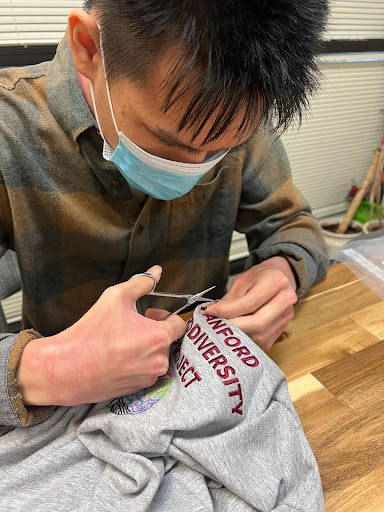
For the past 15 years, Turtleworks founder Sherry Meng has devoted her time as a volunteer and program leader at FCSN, where she has taught students with special needs a wide range of practical skills. However, she soon realized that her students lacked the experience of working for a real business. Through Turtleworks, Meng provides young adults with special needs the opportunity to gain valuable work experience in a supportive environment, fostering their independence and personal growth.
In this interview, Meng describes how parents can best prepare their children for future employment based on her own experiences. She also shares advice for other parents who want to start a business employing people with special needs.
How can parents help children with special needs prepare for future employment?
Sherry Meng emphasizes the importance of developing good working habits in children from an early age. “When you are young, it is easier for people to teach you, and it is easier to change,” Meng said. “When [someone] is getting older…sometimes they come to the working place and they do something wrong, [and] it is hard for people to ask them to change.” To instill these habits, Meng suggests that parents assign chores at home, involve their children in community volunteer work, or help out at friends’ or family members’ shops if possible. For chores at home, Meng recommends starting with small tasks to build reliability and consistency. For instance, parents can ask their child to fold ten pieces of clothing and check on them after 20 minutes to ensure they have done a neat job.
Meng also advises parents to connect with teachers in post-secondary programs at their child’s school. Many of these programs offer robust resources and support systems, including job coaches who assist in job searches. Meng believes this is the best opportunity for young adults to gain exposure to potential job opportunities. Additionally, she encourages open communication with the child’s teachers. “[Teachers] really know the kids’ strengths and weaknesses,” Meng said. “When they look for a job or go to a job site, [teachers] can know which job to associate with which student, and that may save a lot of time.”
Meng also highlights the importance of regulating parental expectations. Sometimes, parents may push for their child to pursue a specific job that does not align with the child’s personality and skills. Meng advises parents to be patient and recognize their child’s strengths and weaknesses before they enter the workplace.
Advice for Parents Starting a Business Employing Individuals with Special Needs
Meng hopes that Turtleworks will inspire other parents to start small businesses that employ people with special needs and that eventually they may link their businesses together. “I hope I am just one example to encourage more parents to try different things for the health of their children,” Meng said. “I think [job experience] is truly meaningful for [kids with special needs] because you can see a lot of them, after graduating…just staying home and having nothing to do, and mentally, it really causes them a lot of health problems…so if we can help them create some kind of working opportunity, it’s really good.”
When starting Turtleworks, Meng had a clear vision of what she wanted to achieve with the small business, but she found the process more challenging than expected due to her limited marketing experience. To avoid significant financial loss, Meng emphasizes that interested parents consider not only the time commitment but also the current market conditions. “Understand your target customers, competition, and industry trends,” Meng said. “Get a mentor if it is possible.”
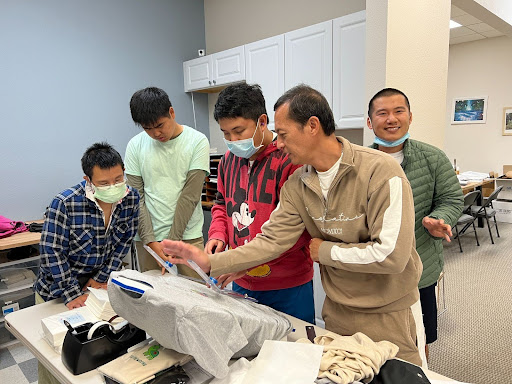
Due to the social and cognitive limitations of individuals with special needs, Meng shares some of these challenges and how she addresses them at Turtleworks. One significant challenge is ensuring they understand the safety protocols – for example, Meng teaches her employees to feel garments after placing them in the machine to ensure they don’t get caught. However, she also acknowledges that they may not fully understand the rationale behind safety measures, so she always provides supervision. Additionally, employees do not always grasp the importance of certain orders, especially those for companies. This can lead to carelessness, especially when cutting garments, which is a problem when garment replacements are not available. To avoid this, Meng provides clear and simple instructions broken down into steps along with constant supervision to ensure tasks are carried out properly.
Another challenge is that employees with special needs often find longer tasks more exhausting compared to their neurotypical peers – for instance, folding 40 pieces of clothing can be very exhausting for them. To mitigate this, Meng breaks tasks into smaller parts and allows employees to take many breaks, helping them to manage their workload without becoming overwhelmed.
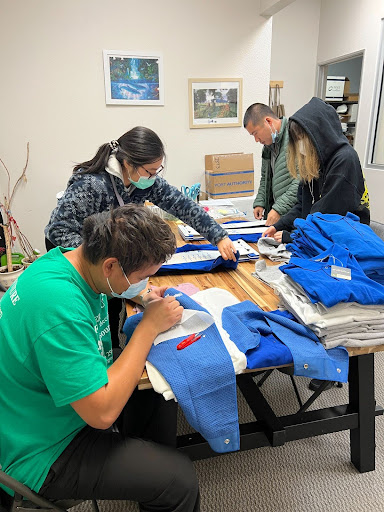
Despite the challenges of working with individuals with special needs, Meng firmly believes that providing them with job experience is a significant step towards their self-growth and independence. She encourages other parents to find a meaningful cause and dedicate their time to it. “No matter what you do for the business, a good cause is super important,” Meng said. “[If you demonstrate] you truly want to help in this community, then…society will help you a lot.”
 fcsnvoices.org