
Written by: Saanvi Shah, FCSN Voices Youth Reporter
Graphics by: Angela Zhao, FCSN Voices Youth Reporter
At first glance, there was nothing unusual about Lawrence Wang as a baby. Born healthy and without complications, he was quiet, calm, and observant. But as the months passed, his mother, Anna Wang, began noticing differences. While other toddlers were beginning to speak and interact, Lawrence remained silent.
By two and a half years old, he was still nonverbal.
At age three, Lawrence was diagnosed with autism.
For Anna and her family, the diagnosis was both overwhelming and isolating. Decades ago, autism resources in the Bay Area were scarce, and few people understood how to support children like Lawrence. Anna remembers feeling lost, especially after raising an older daughter who developed typically. Her husband, a medical doctor, understood medicine, but even he did not know how to navigate raising a child with autism.
“When your child cannot communicate, they act out to show what they want,” Anna explained. “Lawrence could not tell us how he felt.”
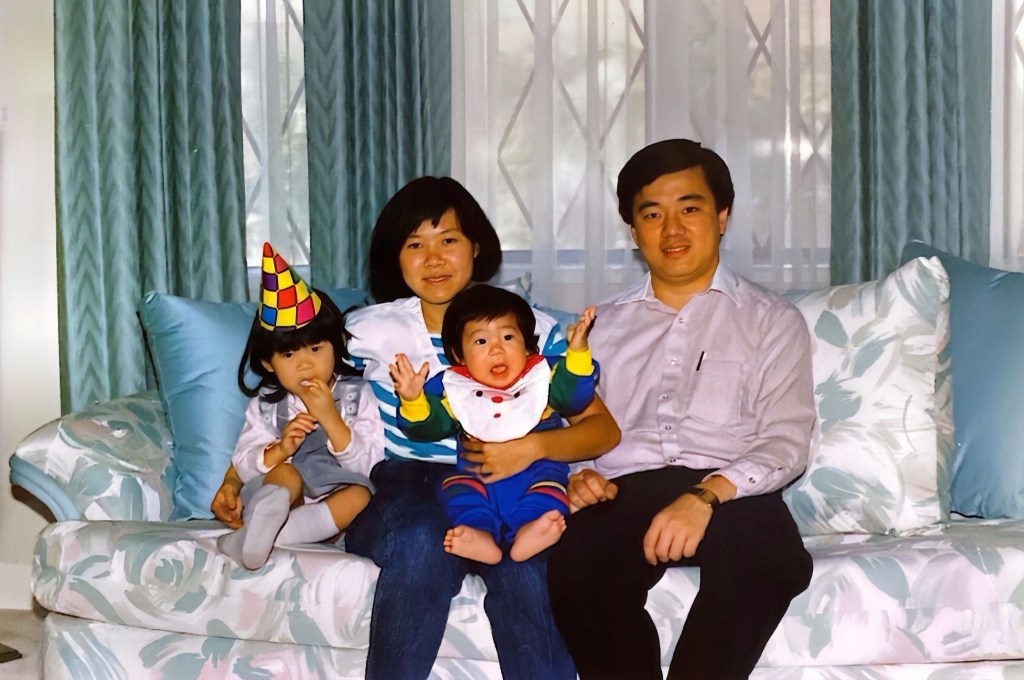
The Wang family together, celebrating a birthday.
Desperate to find help, Anna reached out directly to Dr. Lovaas at UCLA, one of the pioneers of Applied Behavior Analysis (ABA) therapy. Soon after, his wife, Nina Lovaas, began traveling monthly to the Bay Area to train therapists and families, including the Wangs. Their home became one of the earliest centers for ABA training in Northern California, with educators and families gathering to learn how to better support autistic children. Through ABA therapy, Lawrence slowly began learning foundational communication skills — identifying objects, speaking basic words, and expressing simple needs. Around age four, he started talking. However, conversations remained difficult and repetitive, and concepts like emotions and social interaction were much harder for him to understand.
“He could memorize things quickly,” Anna said, “but understanding feelings and relationships was much harder.”
Social situations were especially challenging. Loud noises overwhelmed him, and he often covered his ears in crowded environments. His family assumed he disliked music entirely. Even at Disneyland, Lawrence would shield himself from the sound. For years, no one suspected music would eventually become the center of his life.
When Lawrence was 19 years old, his younger sister proposed creating a music camp through the Friends of Children with Special Needs so children with disabilities could experience music in a welcoming environment. The program became one of FCSN’s first camps, and Lawrence reluctantly joined in 2009.
During the lessons, he sat alone in the corner of the room, covering his ears and talking quietly to himself while the other students gathered around the instructor learning recorder notes. Then something unexpected happened.
After teaching for about half an hour, the instructor asked if anyone could play the note “G.” Suddenly, Lawrence walked out from the corner, picked up the recorder, and flawlessly played the entire demo song: “Rock Around the Clock.”
Although Lawrence had shown no outward interest in music, he possessed extraordinary musical memory and perfect auditory imitation. The teacher immediately recognized his talent and began giving him lessons for free.
Even then, Lawrence resisted attending lessons. Anna often had to incentivize him with money just to get him through the door. During class, he would sit on the sofa, seemingly disengaged, until the teacher demonstrated a song. Within minutes, Lawrence could play it back perfectly.
After only two months of training, he performed as a soloist at a concert. That moment changed everything.
What began with a simple recorder soon expanded into an entire world of music. Lawrence learned soprano, alto, and tenor saxophone, then developed singing abilities as well. Today, he performs nearly 80 times each year throughout the community.
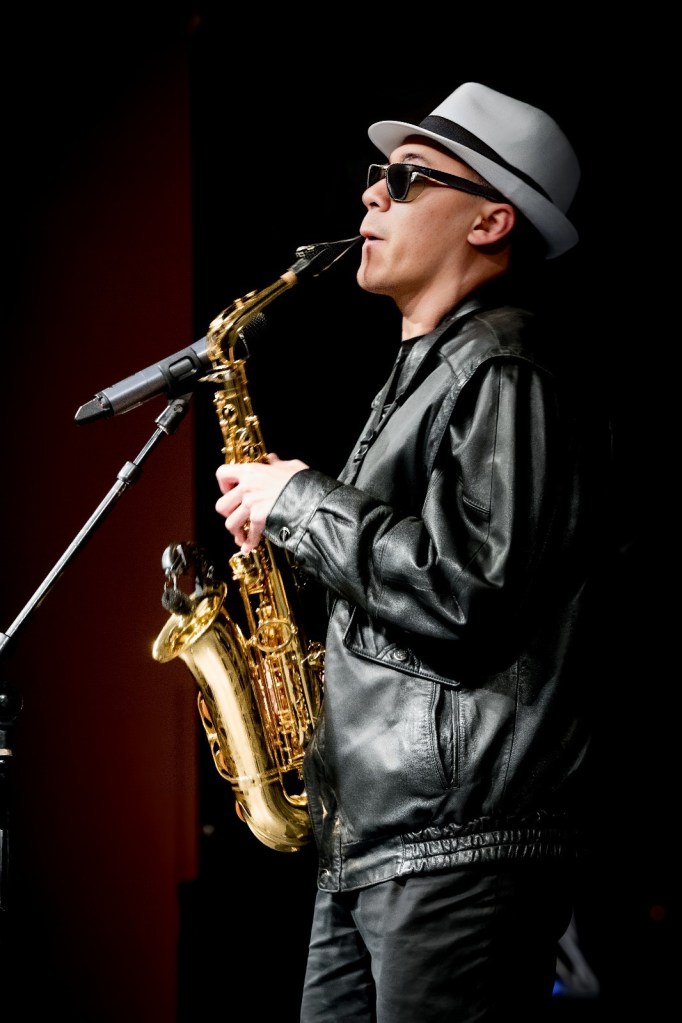
Lawrence pictured playing the saxophone.
His performances have taken him across the world, including appearances in Toronto, Beijing, Shanghai, Hong Kong, and Washington D.C.
Even more remarkably, Lawrence can sing songs in multiple languages, including Mandarin, Cantonese, Korean, Taiwanese, and Spanish. His ability comes almost entirely through listening and replication.
One of his recent performances included the song “Golden” from KPop Demon Hunters. For an upcoming Fourth of July performance, his setlist includes songs like “Tequila,” “Surfin’ USA,” “APT,” and “Golden.”
Music was not the only hidden talent Lawrence discovered. He also developed strong artistic abilities and now creates drawings to earn money independently.
Outside of performing, Lawrence has worked part-time jobs since he was 18, including positions at an accounting office and State Farm Insurance. Anna taught him financial responsibility early in life, encouraging him to track his earnings and contribute rent payments. Though famously careful with spending, Lawrence takes pride in earning his own income and maintaining independence.
Lawrence’s journey also inspired something much larger.
After struggling to find resources and community support, Anna joined nine other families to create Friends of Children with Special Needs, an organization dedicated to empowering individuals with special needs and their families.
What began as families searching for answers eventually grew into a thriving community offering camps, social programs, vocational training, performances, and educational opportunities for countless individuals across the Bay Area.
For Anna, FCSN was never about “fixing” special needs individuals. Instead, it was about creating a place where they could thrive as themselves.
“A lot of people try to raise children according to their own expectations,” she reflected. “But with special needs children, you have to throw away those expectations.”
She believes society often pressures people into conventional definitions of success, even though every person learns and grows differently. To Anna, Lawrence’s story reflects the same lesson.
“Sometimes people are outside the box,” she said. “You cannot force them into one path.”
For many years, doctors and educators focused on what Lawrence could not do — he could not communicate typically, socialize easily, or process the world like other children.
But over time, his family learned to focus on what he could do.
He could hear a melody once and recreate it perfectly.
He could captivate audiences around the world.
He could bring joy to communities through music, art, and performance.
Most importantly, he could live a life surrounded by people who loved and supported him.
“I just want him to be healthy and happy,” Anna said. “That’s what matters most.”
Lawrence Wang’s story is not simply about autism or musical talent. It is about challenging traditional definitions of success and creating spaces where individuals are valued for who they are rather than who society expects them to be. From a quiet child sitting alone in the corner of a room to an international performer standing confidently on stage, Lawrence’s journey continues to inspire families and communities everywhere.

